

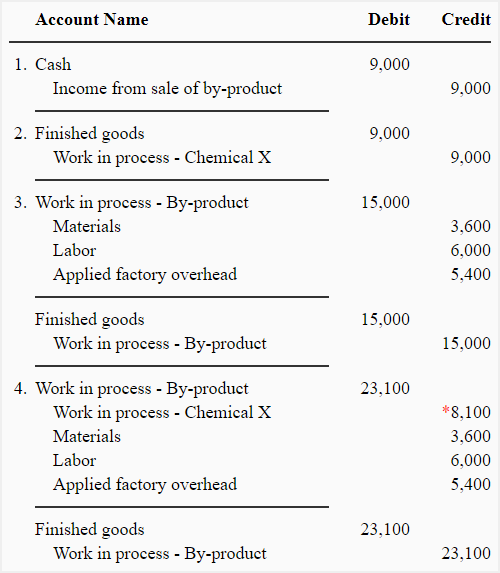
The replacement cost method is an accounting approach that values assets based on the cost to replace them with new ones at current market prices. This method is particularly useful for evaluating the worth of by-products, as it considers the expenses involved in producing or acquiring replacements rather than their historical costs. By focusing on current values, this method helps businesses make informed decisions regarding resource allocation and pricing strategies. The cost approach indicates an intangible asset’s value by considering its replacement or reproduction cost, relying on the economic premise that a prudent investor would pay no more for an asset than the cost to acquire an asset of equal utility. The cost approach is typically applied for the valuation of a workforce—a key component of a firm’s goodwill and a crucial input for the income approach to valuing intangibles. Replacement cost is the price that an entity would pay to replace an existing asset at current market prices with a similar asset.
Great! The Financial Professional Will Get Back To You Soon.
All of our content is based on objective analysis, and the opinions are our own. The cost to replace an asset can change, depending on variations in the market value of the asset and other costs needed to get the asset ready for use. PwC refers to the US member firm or one of its subsidiaries or affiliates, and may sometimes refer to the PwC network. This content is for general information purposes only, and should not be used as a substitute for consultation with professional advisors. Although the concepts of market value and reconstruction cost are different, both are affected by economic conditions.

Do you already work with a financial advisor?
Replacement cost can also be used to estimate the amount of funding that might be required to duplicate another business. This concept can be used to establish one of several possible price points that can be used in the formulation of a proposed price to pay the shareholders of a target company as part of an acquisition. Replacement cost is the cost involved in replacing an existing item with another item having same or similar features. Businesses can assess the depreciation cost of the item against the market value of the same and then decide whether to replace it. The articles and research support materials available on this site are educational and are not intended to be investment or tax advice. All such information is provided solely for convenience purposes only and all users thereof should be guided accordingly.
Journals
- We may earn a commission when you click on a link or make a purchase through the links on our site.
- Another thing to keep in mind is that the replacement cost must include any other cost incurred for the new asset to be fully available and operational.
- For example, if a storm causes damage to your home that is covered by a replacement cost policy, the insurer will reimburse the full cost of repairing your property to the pre-damage condition, whether it is decades-old or brand new.
- Still, sometimes the settlement of the claims is done with a lesser amount than the asset’s actual value.
Market value is in the eye of buyers and sellers, while replacement cost is the sum of all elements brought together to produce a physical property. In the example above, we have made the two total valuations identical, which is the ideal. Overhead and profit component are just two variables that can change the employer payroll tax obligations for tipped employees total cost approach valuation. They are distinctly different concepts that are estimated using different criteria. It is not necessary that the market value and replacement cost of a building are identical, as the two are distinctly different approaches to valuing a property using real estate data analytics.
Insurance companies routinely use replacement costs to determine the value of an insured item. The practice of calculating a replacement cost is known as “replacement valuation.” Businesses with a large asset base may engage in replacement cost budgeting. Under this approach, they anticipate when their key assets are going to require replacement, and then set up a plan to set aside the necessary funds for them, so that they can be replaced in an orderly fashion. For example, a manufacturer of precision widgets knows that a widget lathe will wear out in three years, and so develops a plan for how to come up with its $30,000 expected replacement cost. When the lathe wears out, the manufacturer will have the money to buy a new one.
Article Metrics
Also, the replacement costs of three assets are $80,000, $100,000, and $150,000, respectively. When depreciation is charged on historical cost, it will not match the cost of the replaced asset. Some assets are depreciated on a straight-line basis, meaning the cost of the asset is divided by the useful life to determine the annual depreciation amount. Other assets are depreciated on an accelerated basis so more depreciation is recognized in the early years and less in later years. The total depreciation expense recognized over the asset’s useful life is the same, regardless of which method is used.
Replacement cost is a term referring to the amount of money a business must currently spend to replace an asset like a fixture, a machine, a vehicle, or an equipment, at current market prices. Sometimes referred to as a “replacement value,” a replacement cost may fluctuate, depending on factors such as the market value of components used to reconstruct or repurchase the asset and the expenses involved in preparing assets for use. Consider a manufacturing company, ABC Inc., that owns a fleet of delivery trucks used for transporting goods to customers. To assess the current value of its fleet, ABC Inc. decides to calculate the replacement cost of its trucks based on current market prices. The replacement cost technique is beneficial for those who can take advantage of the same.
This concept is important to businesses because most assets wear out and need to be replaced eventually. After 5-10 years, the vehicle will no longer work and will need to be retired and a new one will need to be purchased. Most likely the replacement will cost more than the price paid for the original vehicle. Another thing to keep in mind is that the replacement cost must include any other cost incurred for the new asset to be fully available and operational. The concept is also used in capital budgeting, when formulating estimates of the funding needed to replace existing assets as they wear out. A business might even set aside cash for several years prior to actually replacing a major asset, based on the amount of its estimated replacement cost.